

Designing Organizations That Think
The goal was never digital transformation. It was building an organization that becomes more capable over time, where knowledge compounds instead of walking out the door every evening.

Thoughts on AI automation, modern software, and the future of work.

The goal was never digital transformation. It was building an organization that becomes more capable over time, where knowledge compounds instead of walking out the door every evening.

For most of history, judgment was a fixed cost tied to headcount. AI changes the accounting. Intelligence is becoming something you can meter, and that changes how you should budget for it.

Every organization sits on a curve between the work it must do by hand and the outcomes it can produce. Automation does not just make you faster. Done properly, it moves the entire frontier outward.

In a lab, power wins. In an operation, reliability wins. A system that is right ninety-nine times and unpredictable once is not ninety-nine percent good. It is a system nobody can trust with the work that matters.

The market talks about AI agents as if they were smarter chatbots. They are not. The real shift is from tools you operate to systems that execute, and the difference is the difference between a demo and a result.

Most enterprise AI projects do not fail because the models are weak. They fail because the organization was never structured to absorb them. Here is what actually breaks, and how to fix it before you automate.

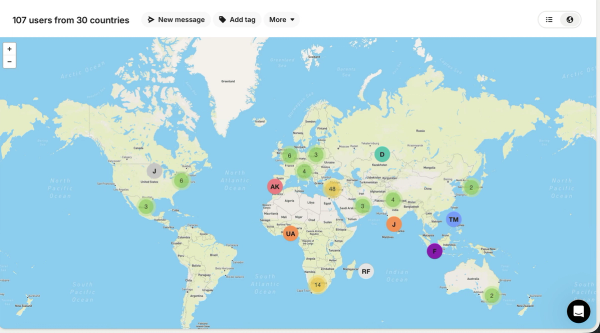
100 users across 30 countries taught us AI adoption is an organizational problem, not a tooling one. What building agents from Africa reveals about global enterprise reality.

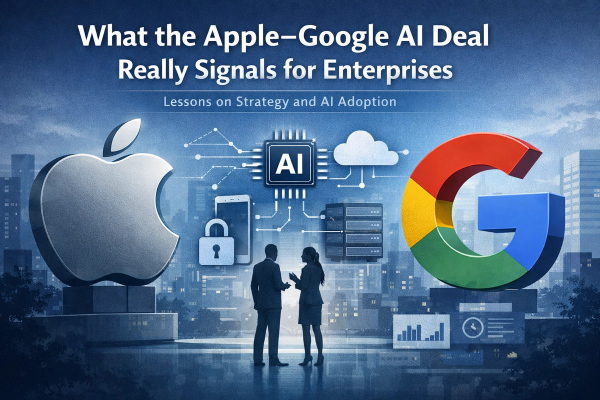
Apple's Gemini deal shows why enterprises should partner at scale, own at trust. Multi-model architecture is resilience, not experimentation.

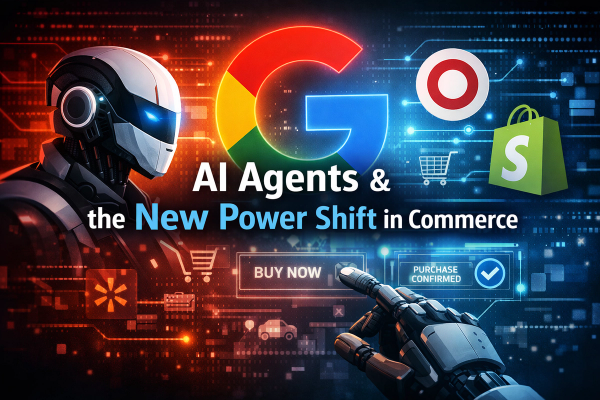
AI agents are changing who controls commerce. This article analyzes Google’s Universal Commerce Protocol (UCP as a control-plane shift, showing how buying power moves from user interfaces to machine-readable operations, and what executives must rethink as agents begin purchasing on behalf of humans.

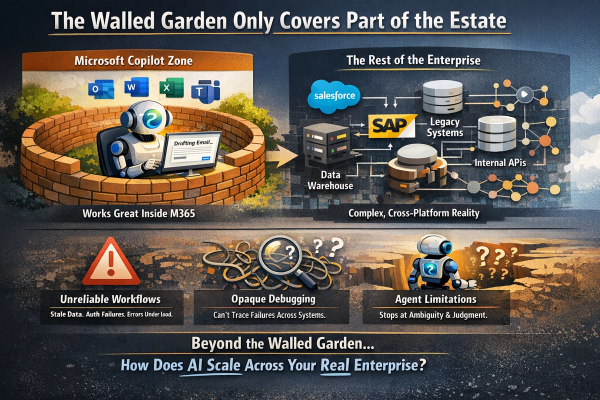
Microsoft Copilot works inside M365. Enterprise AI breaks when workflows span Salesforce, SAP, and legacy systems. Here's what changes at scale.

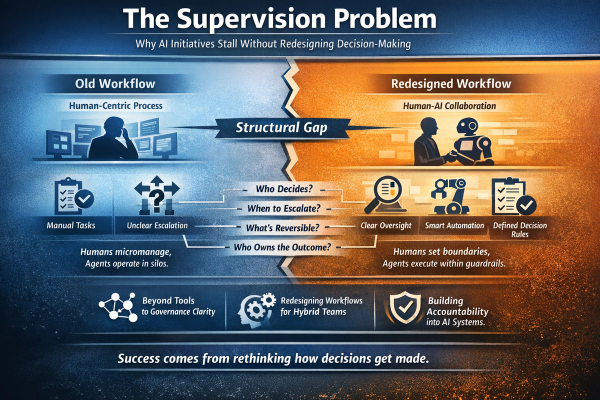
Most organisations will fail at AI not because the tech doesn't work, but because they never redesigned how decisions get made during the shift from tools to agents.

Test-Driven Development turns AI-generated code into reliable backend systems by defining correctness upfront and validating automatically, not prompting better.

Coding agents moved from autocomplete to workflow orchestration in 24 months. Most organizations still treat them as productivity tools, not structural shifts.

AI agents span five categories, from reflex systems to learning models. Understanding the difference determines whether your deployment succeeds or creates ungovernable risk.

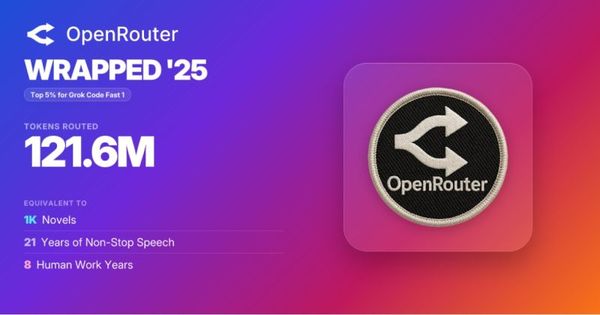
121M tokens across four months taught me this: most AI problems aren't model problems, they're workflow, product, and expectation problems. Depth beats hype.

AI agents aren't smarter chatbots, they're autonomous systems that act. Most enterprises underestimate what it takes to make them reliable at scale.

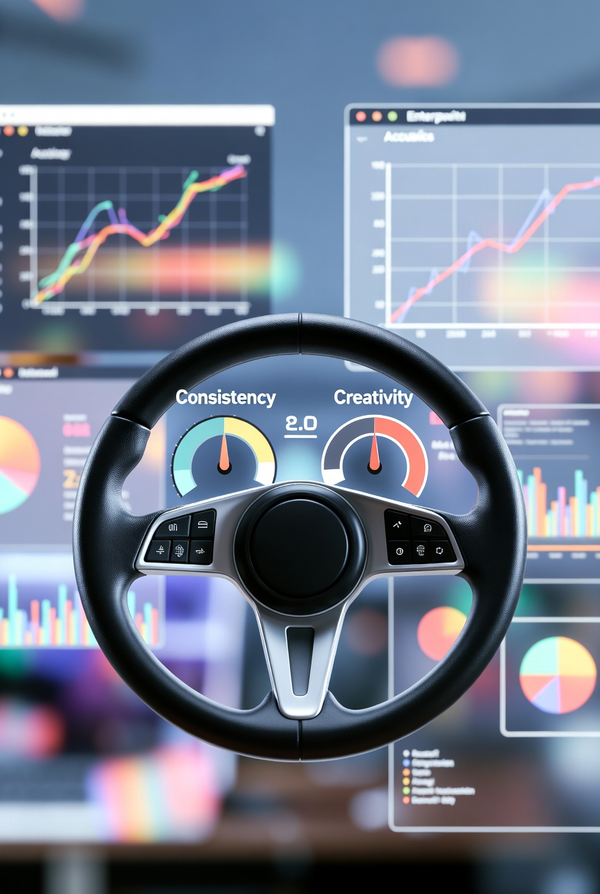
Temperature controls how predictable or exploratory AI responses become. Understanding it is essential for enterprises deploying AI in production workflows.

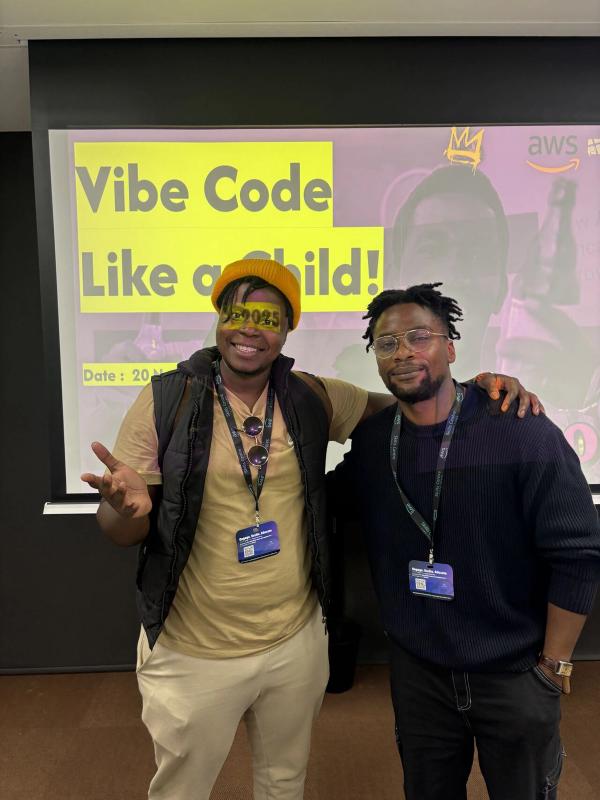
Three developers built a lead-generation agent in 75 minutes. Here's what that reveals about AI system design, founder instinct, and execution discipline in 2026.

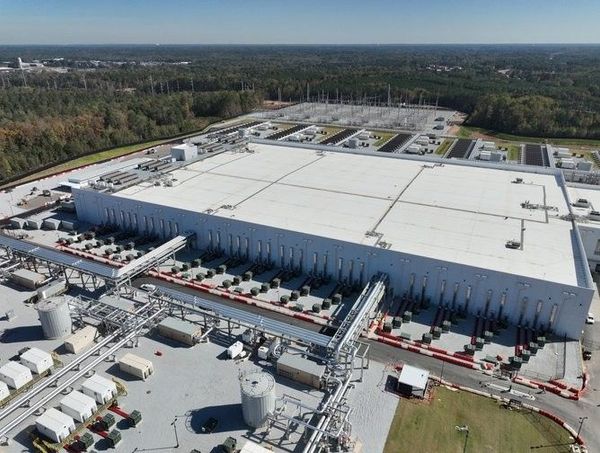
Microsoft's AI facilities expose a new constraint: physics. When training models hits the speed of light as a bottleneck, infrastructure becomes strategy.

Most internal AI initiatives stall when only developers can modify workflows. Adoption depends on feedback loops, not just technical capability.

Founders Conference recap: AI's real impact on operations, capital strategy, agentic workflows in finance, and why execution beats discovery.

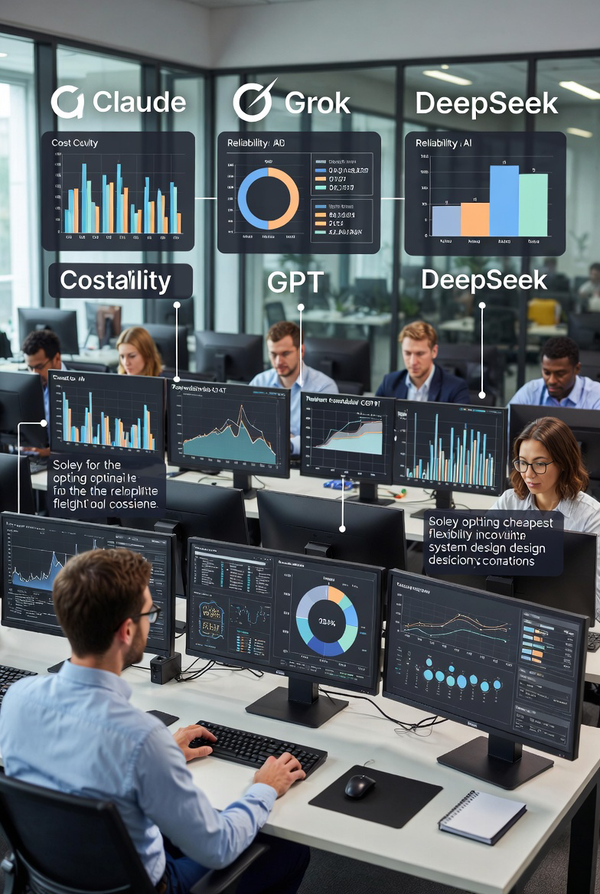
Choosing AI models by price alone ignores reliability costs. Learn why the cheapest model often becomes the costliest mistake in enterprise automation.

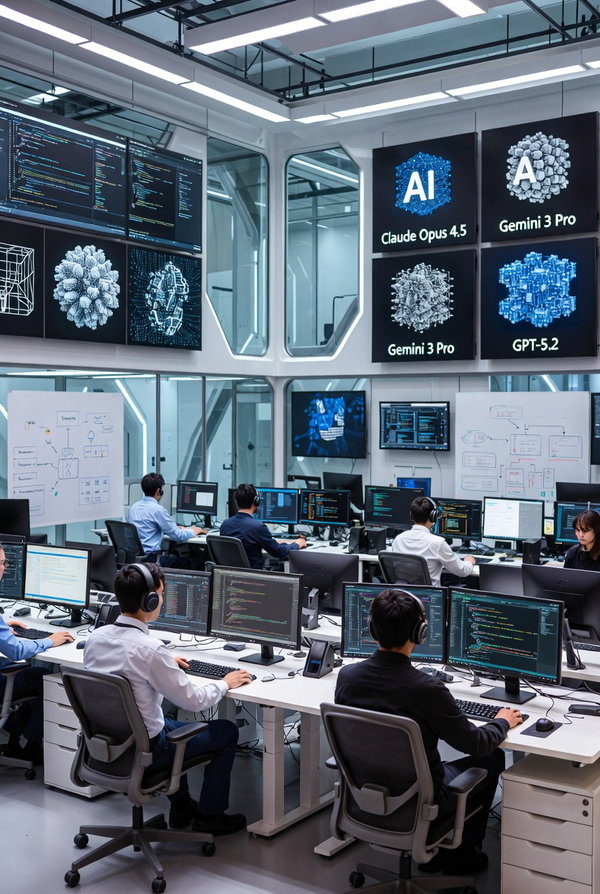
Domain-specific model strengths mean no single AI leads everywhere. Multi-model orchestration is the path to reliable enterprise systems.

AI agents fail in production not from lack of intelligence, but from unreliability. Why capability benchmarks miss the point and what enterprises should design for instead.

Africa doesn't need more AI demos. It needs infrastructure-first solutions designed for real constraints, real workflows, and real business outcomes.

How CCiD modernised its research function through AI-assisted workflows and agent-based systems. A practical case study on digital transformation, human-in-the-loop AI, and building scalable urban intelligence without sacrificing rigor.