
Building organizations that think.
I design how organizations make decisions, then build the systems that execute them.
The companies that outperform over the next decade won't simply adopt AI. They'll redesign how work happens. That's the work I do.
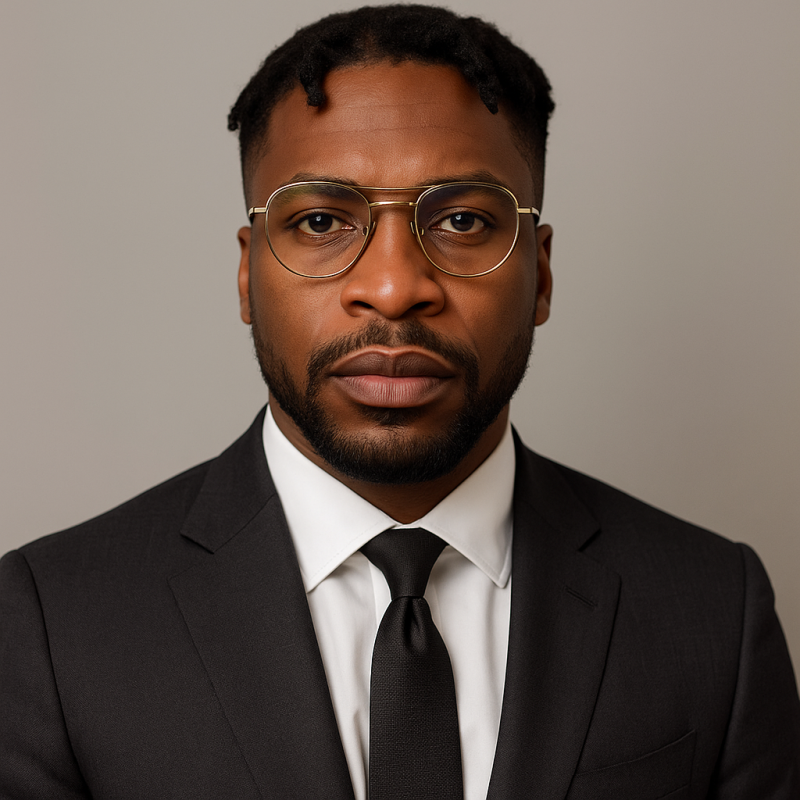

2024 Nedbank Business Ignite finalist
A finalist in the 2024 Nedbank Business Ignite (Nedbank & CapeTalk), South Africa's premier SME growth campaign, featured on Good Morning Cape Town with Lester Kiewit. I was honoured to take this work to air.
Organizations don't have a software problem. They have an execution problem.
Most organizations already know what they should do. The challenge is turning decisions into consistent action. Knowledge sits inside individuals instead of systems. Processes drift. Work is recreated. Valuable expertise walks out the door every evening.
Technology alone doesn't solve this. In many cases, it adds another layer of complexity. I believe organizations should operate differently: knowledge should compound, decisions should be repeatable, and execution should improve as the organization learns.
Artificial intelligence makes this possible, but only when it's built into the operating model rather than layered on top of it.
I began my career in management consulting, working on industrial development, operational redesign, and large-scale transformation programmes across South Africa, from redesigning waste management systems to helping manufacturers coordinate around shared operational goals.
Every engagement followed the same pattern. We diagnosed the problem. We designed a better operating model. The engagement ended. The knowledge left with us. And the organization slowly returned to its previous state.
The real deliverable isn't a presentation. It's an organization that becomes more capable after you've left. I've spent my career trying to build that instead.
Fractal Fit.
Organizations are information-processing systems. Every workflow is a sequence of observations, decisions, and actions. Before software exists, that system already exists inside people, the conversations they have, the approvals they make, the judgement they apply, the exceptions they recognise.
Technology should never invent a new way of working simply because it can. It should first understand how the organization naturally operates, then replicate that structure digitally. When the digital system reflects reality, adoption becomes natural, the software feels obvious because it behaves the way the organization already thinks.
Only then do I automate it. The goal isn't digital transformation. The goal is organizational transformation through software.
Every engagement follows the same philosophy.
Encode judgement
The most valuable asset in any organization is rarely its data, it's the judgement experienced people develop over years of operating. I build systems that capture that judgement and make it available whenever it's needed.
Automate what should be automated
Not every decision deserves AI. Routing, validation, scheduling, classification, and orchestration should be deterministic wherever possible. AI is introduced only where interpretation, reasoning, or genuine uncertainty exists. Reliable systems outperform impressive demos.
Design for compounding
The first implementation is always the hardest, that's where workflows are mapped, decisions classified, and knowledge structured. Every deployment after that is faster. Every new customer improves the platform. Every improvement benefits the next organization.
What I'm building.
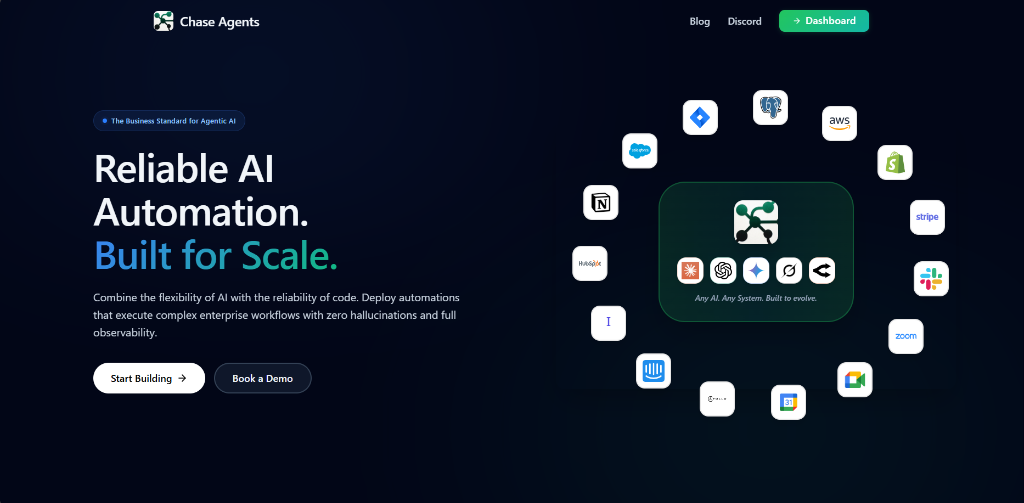

Precinct
Technology for organizations responsible for managing physical environments, combining operational data with spatial intelligence to improve decision-making.
Theory only matters when it survives contact with reality.
How these ideas have been applied across public infrastructure, enterprise operations, and research.
Organizations should become more capable over time.
Every deployment should leave behind structured knowledge that survives people, projects, and technology changes.
AI should reduce work, not create it.
If someone has to constantly prompt a system to keep work moving, the architecture is incomplete. The best systems quietly observe, decide, and act.
Deterministic systems deserve more respect.
Most operational work doesn't require intelligence. It requires consistency. Rules outperform models whenever judgement isn't necessary.
Fractal Fit comes before automation.
Digital systems should mirror reality before attempting to improve it. Organizations don't fail because people resist technology, they fail because the technology doesn't reflect how work actually happens.
Build once. Compound forever.
Every implementation should increase the value of the next one. Organizations shouldn't keep paying to solve the same problem twice.
On organizational design, AI, and the future of execution.
My work today is focused on helping organizations become more intelligent. But my ambition is larger than building software.
Over time, I see this evolving into an operating-focused investment firm that acquires and grows companies by redesigning how they work, not through financial engineering, but through operational engineering: encoding institutional knowledge, removing friction, and building systems that let organizations improve continuously.
The software is one part of that vision. The organizations it enables are the real product.
Building something difficult?
I work with a small number of organizations willing to rethink how they operate , not just adopt new technology. If you're dealing with complex workflows, large volumes of structured information, or institutional knowledge that's difficult to scale, I'd like to hear about it.
Leave your details and I'll reach out.
Or email me directly at [email protected]